
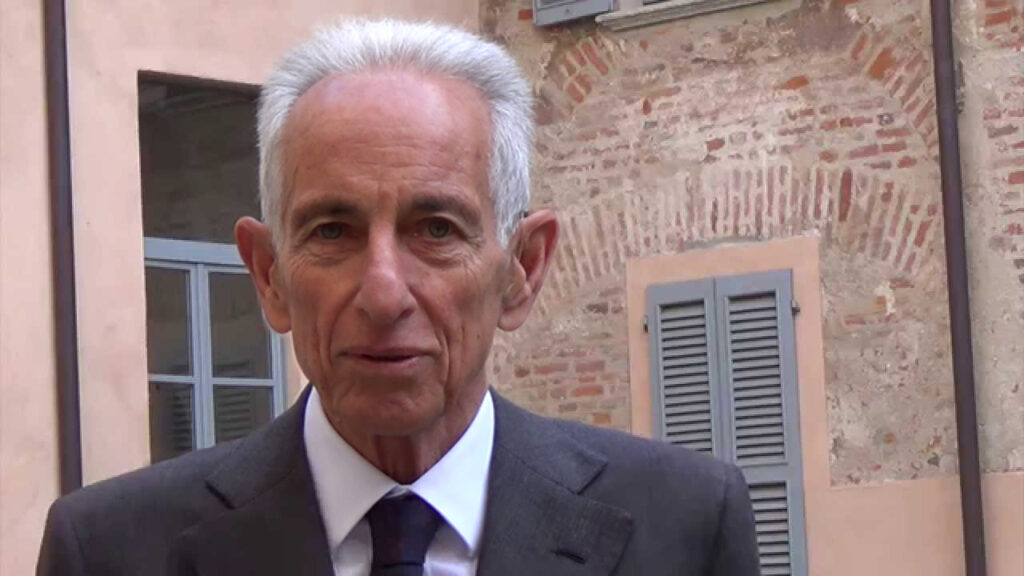
It is with great sorrow that we learned of the passing of Professor Paolo Emilio Pinto on Saturday, 10 January. He was among the most eminent and respected figures in structural engineering in general, and earthquake engineering in particular. His loss will be deeply felt by the entire community.
Professor Pinto’s long and distinguished academic career was closely associated with Sapienza University of Rome. He began teaching in 1968 and was appointed Full Professor of Structural Engineering in 1976, a position he held until 2011. As a researcher, Professor Pinto made foundational contributions to probabilistic and reliability-based methods in earthquake engineering. He played a pioneering role in advancing quantitative approaches for predicting and understanding the seismic behaviour of structural systems, with a particular focus on reinforced concrete structures. His highly cited publications addressed topics such as the nonlinear seismic response of bridges and structural systems and the performance-based assessment of existing structures. His scholarly work reflects a rare combination of theoretical development, probabilistic modelling, and engineering application, leaving a lasting mark on both academic research and professional practice in seismic safety.
Professor Pinto was established risk-informed decision-making in earthquake engineering practice in Europe and his influence extended far beyond his scientific publications and was perpetuated along two further axes: the development of design codes and education. In the area of code development, his role was particularly significant. He served as the first Chair of the CEN-TC 250/SC8 Committee, coordinating the drafting of Eurocode 8 between 1990 and 1999. Even earlier, he had assumed positions of major international responsibility. Within the Comité Euro-International du Béton (CEB), he chaired the Technical Group on Seismic Design from 1980 to 1998, overseeing the preparation of the Model Code for the Seismic Design of Concrete Structures published in 1983. From 1998 onward, he led the Seismic Design Commission of the International Federation for Structural Concrete (fib). At the national level, he also played a central role in the development of Italian seismic regulations: in 2003, he was one of the four authors of the earthquake-resistant construction standards (Ordinance 3274), and in 2012 he chaired the drafting of the National Research Council guidelines Reliability-Based Assessment of the Seismic Safety of Existing Buildings (CNR/DT 212).
Beyond his extraordinary scientific and professional achievements, Professor Pinto was a dedicated and gifted teacher. He taught generations of students at Sapienza University of Rome and, in the later stages of his career, also at the ROSE School in Pavia. For nearly a decade, he served as President of the Scientific Council of the Eucentre Foundation, where he was widely appreciated as a constant source of balance, insight, and wisdom.
Those who worked closely with him remember Paolo Emilio Pinto as a “gentle and demanding” leader. He had a rare ability to stimulate independent and lateral thinking in his students while never compromising on methodological rigour. Distinguished by a refined understatement, he was a man of few and carefully chosen words, endowed with deep cultural breadth, rare sensitivity, and a profound sense of institutional responsibility. His generosity in friendship and his gentlemanly demeanour were not merely personal traits, but a true way of life.
His students, colleagues, and friends will remember him for the passion with which he taught, the intellectual integrity he embodied, and the enduring example he leaves behind.
(contributed by Paolo Franchin, Luigi Sorrentino, and Katrin Beyer)